Welcome to Better Vision Malaysia!

30 Days Returns
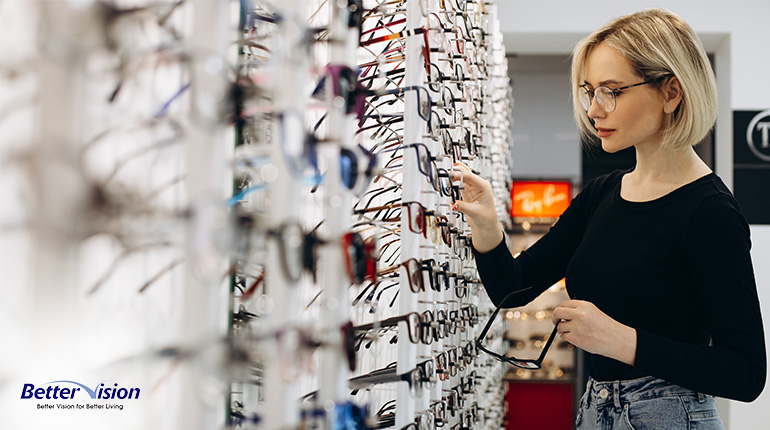
Eyeglasses have come a long way since the 13th century. Today, choosing a pair of optical lenses and frames that suit your specific preferences is no longer a daunting task, thanks to the wide variety of choices available. The two most common are glass and plastic lenses. Before getting them, understanding how they differ from each other is essential. In this article, we will discuss how the duo can be distinguished.
Learn more: Choosing The Right Spectacle Style
Glass lenses were the standard material for eyeglasses until the 20th century. To make glass lenses, a piece of glass is grinded, polished and shaped into the correct curvature to correct vision problems. Glass lenses are known for their excellent optical clarity and scratch resistance. They can enhance vision better than plastic lenses due to the unlikeliness of light distortion. Nonetheless, glass lenses may be heavier and more expensive than plastic lenses, due to the material.
On the other hand, plastic lenses are a relatively recent innovation compared to glass lenses. First developed in the 1940s as a lightweight and shatter-resistant alternative to glass lenses, plastic lenses are now available in several different types. These include polycarbonate, CR-39, and high-index. Plastic lenses are much lighter than glass ones, making them more comfortable to wear for longer periods of time. In addition, they are safer for wearing as they are less likely to shatter. Despite the advantages, glass lenses are more prone to scratches. This may reduce their optical clarity over time.
Providing the best refractive index for their thickness, glass lenses are always a classic and popular choice when it comes to getting a new pair of eyeglasses. While they may not be the lightest option available, they do offer several advantages over other types of lenses.

1. Scratch resistance
Though glass may shatter easily, they are scratch resistant in comparison to other materials like plastic. This makes glass lenses an ideal choice for individuals who tend to scratch their glasses due to the activities they perform or the environments they work in. Still unsure of how to choose a suitable pair of glass lenses? Seek professional advice from opticians at optical shops near you.
2. Thinness
Glass lenses can be made thinner than plastic lenses. As glass comes with a higher refractive index than plastic, it is more effective in bending light. Thanks to this, glass lenses can correct vision problems with less material.
3. Optical clarity
Individuals donning glass lenses may have sharper, clearer vision than those who wear plastic lenses, as glass is a very clear material, contributing to greater visual acuity.
Glass lenses are favoured by many when it comes to getting a new pair of eyeglasses. If you’re in the market for a new pair of glasses and willing to invest a little more money, glass lenses may just be the perfect choice for you. Just be sure to choose a pair of glasses that meet your specific needs and preferences.
While glass lenses are in high demand, the popularity of plastic lenses has been growing as well, especially for those who require visual aids. This fad extends to plano (non-prescription) sunglass lenses too. Apart from its lightweight property, plastic lenses also offer the following benefits:

1. Durability
Plastic lenses are very durable and hence, can withstand impacts and bending without cracking or breaking. If you are someone who leads an active lifestyle, or looking for a pair of glasses for your children, who tend to be more rambunctious, consider plastic lenses.
2. Wide variety of transition lens options
Plastic lenses usually come with a wide variety of transition lens options. These lenses can provide added protection for the eyes by automatically darkening, in response to bright light.
3. Easy to tint
Compared to glass lenses, plastic lenses are much easier to tint, as they are more receptive to dyes and coatings. There are several types of tints available for plastic lenses, ranging from solid tints, gradient tints to photochromic tints. Solid tints are evenly tinted throughout the lens, while gradient tints are darker at the top and gradually lighten towards the bottom. Photochromic tints change colour depending on the amount of UV light present. Listed below are the several benefits of tinting plastic lenses:

Overall, plastic lenses are a versatile and easy-to-tint option. They are ideal for those looking to customise their glasses. Whether you are going to purchase eyeglasses or contact lens online in Singapore, always consult a professional optician and let them know your individual preferences, in order to choose a lens material that meets those needs.
When it comes to choosing the perfect pair of eyeglasses, lens material makes all the difference, influencing both visual clarity and overall comfort. In the next part of this article, we will provide a quick comparison of glass vs. plastic lenses, examining the factors that should be considered to differentiate the two. With a better understanding of the differences, making an informed decision is made easy. Take a look at the brief comparison below:
1. Weight
The weight of your lens impacts comfort. Typically, plastic lenses are lighter compared to glass lenses of the same size and thickness. This is because plastic lenses are made from lighter materials like Trivex or polycarbonate, which come with a lower density than glass. In addition, the lightweight nature of plastic lenses makes them more comfortable to wear for extended periods, as less pressure is exerted on the nose and ears. This also makes them less likely to slip down the nose. Plastic lenses are suitable for individuals with active lifestyles or those who engage in sports activities that focus on weight and impact resistance. If you are a sports enthusiast, choosing a suitable pair of sports sunglasses in Singapore can enhance your sports experience.
2. Scratches
Scratches are a common problem that may affect the overall appearance and performance of lenses. They impair the optical quality of lenses, reducing the effects of vision problem correction. Compared to plastic lenses, glass lenses are less prone to scratches as they are made from a harder material than plastic. This makes them suitable for individuals who require durable lenses that can withstand wear and tear. On the other hand, plastic lenses are more prone to scratches as they have a softer material composition. However, it is worth noting that some manufacturers have developed scratch-resistant coatings for plastic lenses, which can help to minimise the risk of scratches. Typically, these coatings are applied to the surface of the lens during the manufacturing process to improve its durability and lifespan.
3. Breakage
Breakage can be a significant concern for eyeglass wearers. Lenses that are prone to breakage pose a safety risk and cause inconvenience, particularly for people who lead an active lifestyle or work in hazardous environments. In general, plastic lenses, such as polycarbonate and Trivex lenses, are made of a flexible material that is more resistant to shattering, making them less likely to break if dropped or hit. Therefore, they have higher durability and better impact resistance. When choosing children’s glasses, go for those made of plastic lenses as they can better withstand rough handling. Meanwhile, the hard and brittle nature of glass lenses makes them more prone to breakage, which may injure the wearer’s eyes or skin.

4. Clarity
Clarity refers to the degree of visual acuity and sharpness of an image produced by a lens. In this context, glass lenses come with a higher optical clarity, which can better reduce distortion and aberration than plastic lenses. On top of that, glass lenses may provide a better visual experience than plastic lenses, due to the higher refractive index. This means that they can bend light more efficiently, allowing for more precise correction of vision problems.
In contrast, plastic lenses, such as polycarbonate and Trivex lenses, have a lower refractive index than glass lenses, which means that they bend light less efficiently. This can result in thicker lenses and less accurate vision correction. Plastic lenses are also more prone to optical distortions and aberrations, which can affect visual clarity and cause eye strain and headaches.
No doubt, lens material is an important element when choosing eyeglasses, however, some individuals may prioritise blue light protection in our increasingly digitalised landscape. Fortunately, blue light glasses in Singapore are available in various types, ranging from prescription glasses to non-prescription glasses. These glasses can be made from different materials too such as glass, plastic, and polycarbonate. Their clarity depends on several factors, including the lens type, quality, material and coating used.
Being able to differentiate among lens categories can be helpful when it comes to choosing the right type of glasses for your needs. From single vision to progressive lenses, each has its own unique features and benefits. In this section, we will explore the different lens categories to help you make a more informed decision.
1. Single vision lenses
Designed to correct vision problems such as hyperopia (farsightedness), myopia (nearsightedness), and astigmatism, single vision lenses are prescription lenses that come with the same power across the entire lens. They can be used as Myopia correction lenses and provide clear vision at a specific distance, whether near or far. However, the lenses cannot correct certain vision problems such as presbyopia, which is the loss of near vision due to ageing.
2. Bifocal lenses
Made up of two lenses with different powers and typically separated by a visible line, bifocal lenses are often prescribed for people who have both near and far-sighted vision problems. The upper portion of the lens corrects distance vision whereas the lower one corrects near vision.
3. Trifocal lenses
Similar to bifocals but with an additional lens power to correct intermediate vision, which is the range of vision between near and far, trifocal lenses are often prescribed for individuals who also have presbyopia. It comes with extra lens power that is generally positioned between the distance and near vision sections of the lens.
4. Progressive lenses
Known as no-line bifocals, progressive lenses are designed to correct vision at near, intermediate, and far distances without visible lines. They work by having a gradual change in power from the top to the bottom of the lens. The upper portion of the lens corrects distance vision, the middle rectifies intermediate vision, and the bottom part corrects near vision. Providing a smooth transition between lens powers that enables the wearer to see clearly at all distances, these lenses empower a more natural vision experience. There are various types of progressive lenses offered in Singapore, including digital and free-form lenses.

5. Toric lenses
Toric lenses are used to correct astigmatism, which occurs when the cornea is irregularly shaped, causing blurry or distorted vision at all distances. As one of the types of single-vision lenses, toric lenses are designed with a special shape that matches the irregular shape of the cornea to provide clear vision for those with astigmatism.
6. Prism lenses
Heterophoria is a condition where the eyes are misaligned and it can cause double vision, headaches, and other vision problems. Using prism lenses can bend light to align the eyes properly and address this issue.
Different lens materials feature their own levels of durability, weight, thickness, and clarity. All of these aspects can affect both the overall look and comfort of the glasses. Read on to learn more about some of the most common types of lens materials used in eyeglasses. Understanding the advantages and disadvantages minimises the potentiality of choosing a pair of eyeglasses that do not suit you.
1. CR-39
Commonly used in the production of eyeglass lenses, CR-39 is a thermal-cured plastic polymer known for being cost-saving and lightweight. The lenses may be thicker and heavier than other materials, hence, they may not be suitable for strong prescriptions. Prescription sunglasses in Singapore are made from various materials, including CR-39, and can come in a variety of tints and coatings. Their main function is to correct vision and protect the eyes from the harmful effects of the sun’s UV rays.
2. Polycarbonate
Polycarbonate lenses are made from a type of thermoplastic material that is impact-resistant. They are more durable and less likely to shatter than other lens materials, making them a popular choice for prescription eyeglasses. These lenses are also thin, lightweight, and provide good UV protection. Nonetheless, they can be prone to scratches.
3. High-index plastic
High-index plastic lenses are thinner and lighter. If you have strong prescriptions and are looking for more aesthetically pleasing lenses, this material can be an ideal choice. In addition, this plastic provides outstanding optical clarity but may cost more compared to other materials.

4. Glass
Featuring a number of excellent optical qualities, glass lenses can be a popular choice for eyeglasses. Nonetheless, there may be people who prefer going for other lens options as glass lenses are often heavier and more prone to breakage. Glass lenses are resistant to scratching and offer superior optical clarity, making it a good choice for those with strong prescriptions. They also suit specialty lenses like bifocals or trifocals.
Better Vision operates as an eyewear retailer in Singapore. We offer an array of lenses to meet the specific needs of customers, ranging from anti fatigue lenses, progressive lenses to contact lenses. Choosing the right lenses empowers greater visual comfort, clearer vision and protects eye health, in any environment. Refer below for an overview of our lens guide:
1. Computer lenses
Similar to anti-fatigue lenses, computer lenses are designed to minimise eye strain caused by prolonged use of digital devices. They can provide clear vision at the intermediate distance, which is the distance between the eyes and the computer screen. A significant difference between computer lenses and anti-fatigue lenses is that the latter relaxes the eyes’ focusing muscles and reduces the amount of blue light that enters the eyes.
2. Transition lenses
Also referred to as photochromic lenses, transition lenses automatically adjust their level of darkness based on the amount of UV light present. Thanks to its ability to darken in bright sunlight and lighten in indoor or low-light environments, transition lenses provide convenience and comfort for those who move between indoor and outdoor environments on a frequent basis. Before getting transition lenses in Singapore, be mindful to do some research first in order to choose one that best suits your vision needs.
3. Progressive lenses
Progressive lenses are designed to correct presbyopia, an age-related condition that affects near vision. These lenses provide a smooth transition from distance vision to near vision by featuring a gradual change in prescription from the top of the lens to the bottom. People also call it no-line bifocals or varifocal lenses.
Learn more: 5 Reasons To Choose Progressive Lenses For Your Next Eyeglasses
4. Myopia control lenses
Myopia control lenses can help to slow down the progression of myopia, or nearsightedness, in children. These lenses gently reshape the cornea overnight while the child sleeps. The next day, the child wakes up with clear vision without the need for glasses or contact lenses.
5. Anti-fatigue lenses
Do you use digital devices such as computers, smartphones, and tablets for prolonged hours? If you do, chances are you may suffer from eye strain and fatigue. In this case, anti-fatigue lenses are a good choice. These lenses come with a special design that helps to relax the eyes’ focusing muscles. The amount of blue light that enters the eyes can also be reduced.
6. Ortho-K lenses
Ortho-K lenses, or Orthokeratology lenses are worn overnight to temporarily correct nearsightedness, farsightedness, and astigmatism. They are designed to reshape the cornea of the eye while you sleep. Made of a gas-permeable material, these lenses allow oxygen to reach the eye. Typically, traditional contact lens prices in Singapore are less expensive than ortho-k lenses. However, ortho-k lenses offer long-term cost efficiency as you do not have to replace them as frequently. The price varies depending on the brand, type of lens and where they were purchased.

1. How should my lenses fit my frames?
You can always find frame measurements printed on the inside of either of your frame’s temple arms. There are three numbers that indicate these measurements, representing the lens width, bridge width, and temple length respectively.
2. Should I wear my eyeglasses all the time?
Those with nearsightedness or farsightedness, who have been prescribed glasses for certain purposes can wear their glasses only when needed. In contrast, people who need eyeglasses to see both near and far distances, along with their doctor’s recommendation to wear eyeglasses full time, should do so all day.
3. Are Ortho-K lenses prone to breakage?
Ortho-K contact lenses can withstand slight damage in normal wearing circumstances. Nonetheless, they are still breakable, if not handled well. In Singapore, Ortho K lenses are available from specialised eye clinics, or optical shops with the necessary equipment to fit and monitor the lenses. The fitting process involves a detailed eye examination and measurement of the corneal curvature to determine the correct lens prescription.
All in all, choosing the right lenses for your eyeglasses is an important decision. While most eyeglasses are made of glass and plastic, understanding the differences between the two can ease your decision-making process. In general, plastic lenses are lighter, more durable, and come with advanced features such as blue coat and transition. However, they may be more costly. On the other hand, glass lenses are affordable, scratch-resistant and usually come in limited customisation options.
Always be sure to take durability and safety into consideration when choosing eyeglass lenses. After which, think about your individual needs and preferences. For example, people who spend a lot of time working on digital devices may benefit from lenses that block blue light, while lenses with higher durability suit those who are always active.
Better Vision offers quality eyewears such as prescription sunglasses and daily contact lenses in Singapore. We always prioritise your eye care needs. Do not hesitate to contact us now if you are seeking a desired pair of eyewear.